Why Frozen Fish Is Often Fresher Than Fresh and How to Buy It Well
Quick Answer: Much of the best fish is frozen within hours of catch at sea, locking in day-one condition — while the fresh counter routinely displays fish that spent five to fourteen days traveling on ice, and a meaningful share of that counter was previously frozen anyway, thawed for display. Frozen-at-sea fish, kept properly frozen until your kitchen, is frequently the fresher product in every sense that matters: texture, flavor, and safety. The skills worth having are reading the freezer case — glaze, packaging, refreeze warnings — and thawing correctly, which is where home cooks give the advantage back.
Here is the timeline the word fresh hides, and the buying and thawing playbook.
What does fresh at the counter actually mean?
Not frozen. That is the entire legal and practical content of the word — it is a temperature history, not a quality grade.
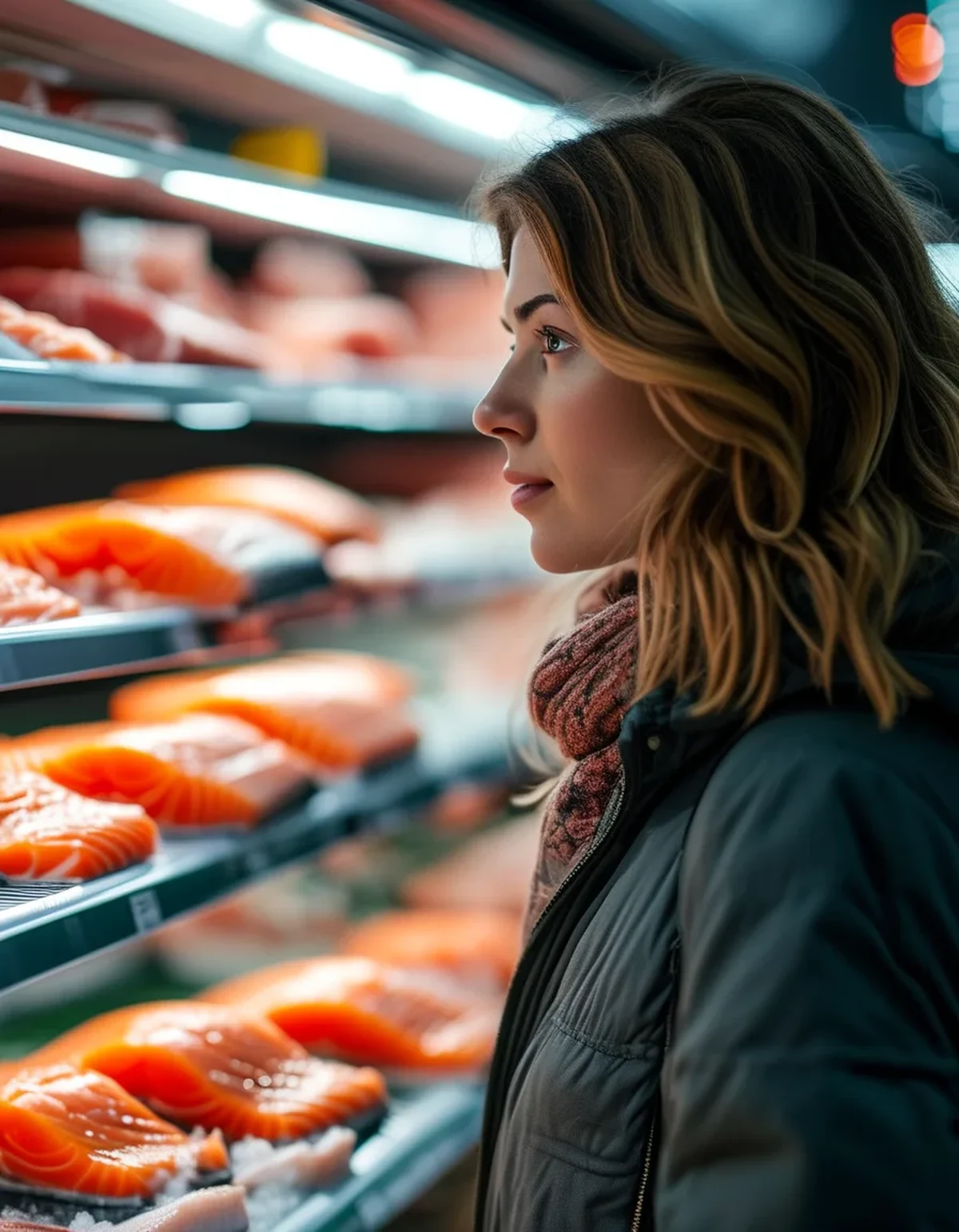
Follow a typical fresh fillet backward: caught at sea, iced in the hold while the boat finishes its trip — often one to five days — then landed, auctioned, processed, trucked or flown to a distributor, delivered to the store, and displayed on ice for another day or three. A perfectly normal fresh fish is five to fourteen days from the water by the time you meet it. Skilled cold-chain handling keeps it safe and decent through that window, but decent is the ceiling: texture softens and flavor fades from day one, continuously.
Now the frozen timeline: on modern boats, fish are processed and blast-frozen within hours of leaving the water — frozen-at-sea, at temperatures far below a home freezer, which is cold enough to essentially stop the clock. That fillet is day-one fish, paused. It stays paused through shipping and the freezer aisle until you thaw it — at which point you hold something closer to just-caught than the counter has displayed all week.
Two open secrets complete the picture. A meaningful share of fresh counters is previously-frozen fish, thawed for display — legal and labeled, usually in small print — which means you are paying the fresh premium for defrosted fish plus display days. And the freshest-looking counter fish often becomes the sushi-adjacent premium tier, priced accordingly; the middle of the counter is where the long timelines live.
None of this makes counters bad — a good fishmonger near a port, moving volume daily, sells genuinely superb fish. It makes the word fresh uninformative. The question that cuts through at any counter is: what day did this come in? A shop that answers plainly is a shop worth trusting.
What actually happens to fish when it freezes?
One real risk — ice crystals — and modern processing exists specifically to beat it.
Freeze anything slowly and large ice crystals form between and inside cells, puncturing structure; thaw it and the damage weeps out as drip loss, leaving softer, drier texture. This is why fish frozen badly — or frozen, thawed, and refrozen — earns the mushy reputation. The variable is crystal size, and crystal size is set by freezing speed.
Commercial blast and plate freezers take fish through the critical zone in minutes, forming crystals too small to tear much of anything. Done at sea on day-zero fish, the result routinely beats week-old never-frozen fillets in blind tastings — not because freezing improves fish, but because it stops time better than ice ever can.
This explains the practical hierarchy. Frozen-at-sea or flash-frozen, kept solidly frozen until your kitchen: excellent. Fish that softened for a week and was then frozen at the store: the age is locked in, not reversed. Fish that partially thawed in transit and refroze: the worst of both worlds — and it announces itself in the package, which is what the next section teaches you to read.
A bonus most shoppers never hear: freezing is also the standard parasite control for fish served raw — the deep-freeze protocols sushi suppliers follow exist because freezing kills what refrigeration cannot. The frozen aisle is not the compromise section; for most home cooks far from a working dock, it is the premium section wearing modest packaging.
The one honest trade-off: delicate, high-moisture species — thin sole, some flaky white fish — show freezing more than firm ones. Salmon, cod, halibut, tuna, shrimp, and scallops freeze brilliantly, which conveniently covers most of what home kitchens cook.
What Nobody Tells You at the Freezer Case
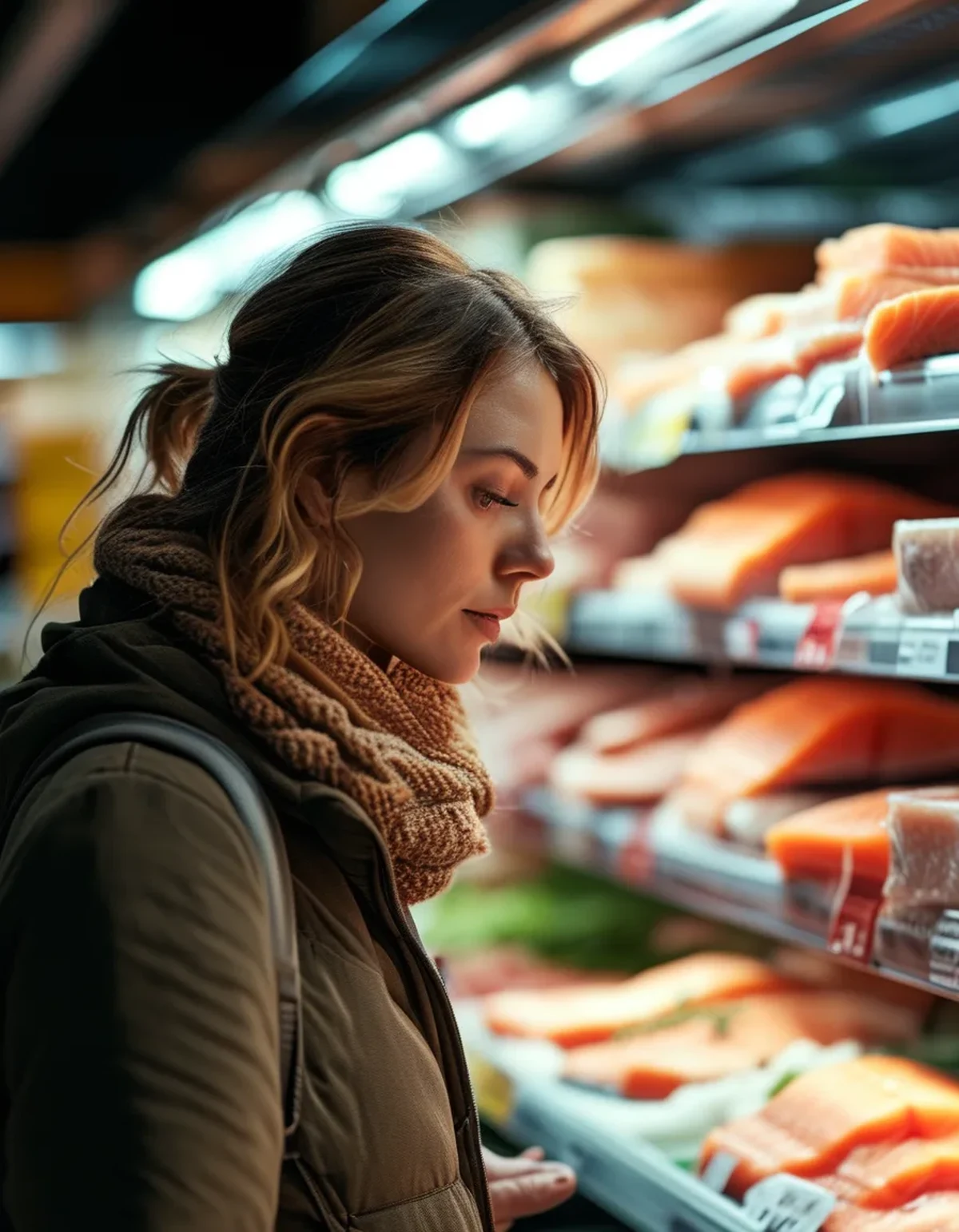
The glaze is armor, not filler. Good frozen fish wears a thin, even ice glaze that blocks air. What you are avoiding is the opposite signal: frost and snow inside the bag, which means moisture left the fish — freezer burn in progress — or the package warmed and refroze somewhere along the way.
Read the fish through the packaging like a detective. Ice crystals clumped in bag corners, fillets frozen together in a solid brick, or a misshapen block that clearly slumped and re-hardened all testify to a thaw-refreeze event. Individually vacuum-sealed fillets, hard as tile, with tight film and no internal frost are the tell of an unbroken cold chain.
White patches and dry edges are freezer burn — trim tax, not danger. Burned areas are safe and taste like cardboard; a small patch can be cut away, a widespread one means the package is past its best regardless of date.
The label tells you more than the counter ever did. Species, catch method, origin, and often frozen-at-sea or the processing date — information the ice display strips away. Single-ingredient packages — fish, maybe salt — beat treated ones; added solutions plump weight with water you pay fish prices for, and sodium tripolyphosphate on the label is the tell.
Shrimp and scallops in the freezer aisle are almost always the same product as the seafood counter’s — thawed in back, displayed on ice, priced higher with a shorter fuse. Dry-packed scallops, the untreated kind that actually sear, hide in the freezer section too.
Buy frozen last, bag it with the other cold things, and go home. The cold chain you just audited has one final custodian, and it is your trunk in August.
How do you thaw and cook it without giving the advantage back?
The gap between good and mushy frozen fish is usually the last twelve hours, and it is entirely in your hands.
The gold standard: overnight in the fridge. Move the sealed portion from freezer to refrigerator the night before — slow, cold thawing minimizes drip loss and keeps the whole journey safe. One non-negotiable detail for vacuum-sealed fish: open or puncture the packaging before thawing. Airtight pouches and slow warmth are the textbook setup for botulism risk; the fix costs one scissor snip.
The weeknight standard: cold water, 20 to 40 minutes. Sealed bag, bowl of cold tap water, weight it down, change the water once. Portions thaw in under an hour, texture protected. Never warm water and never the counter — the outside of the fish spends hours in the bacterial comfort zone while the middle catches up, softening and souring the exact product you chose for its preserved quality.
The skip-it option: cook from frozen, on purpose. Salmon and cod fillets roast beautifully straight from the freezer — rinse off the glaze, pat dry, oil, season, and add roughly half again the cooking time at a slightly lower oven temperature. For a rushed Tuesday this beats a badly rushed thaw every single time.
Before cooking, always: pat aggressively dry. Thawed fish carries surface moisture that ruins searing and steams crusts soggy — dry fish is the difference between a restaurant surface and a pale one, and it costs two paper towels.
Then cook it slightly gentler than fresh. Thawed fillets give up moisture a touch faster, so pull them a shade earlier — flesh just turning opaque, flaking under a fork tip. And late summer is the season to keep it simple: high-heat grill or roast, olive oil, lemon, and the August tomatoes and corn already on your counter beside it.
This is general information, not medical advice — standard food-safety rules on refrigeration times and doneness apply as always, and when a thawed package smells sour or ammoniated, the trash is the correct pan.
FAQ: Frozen Fish Questions, Answered
Is fresh fish ever the better buy?
Absolutely — near a working coast, from a busy shop that answers the what-day question plainly, same-day or next-day fish is the peak of the category. The claim is not that fresh loses; it is that the average freezer-case fillet beats the average inland counter fillet, and the label lets you verify in a way the ice display cannot.
How long does fish actually keep in my home freezer?
Quality-wise: fatty fish like salmon are best within about two to three months, lean white fish stretch toward six or more; safety-wise, indefinitely at a constant zero degrees Fahrenheit. Home freezers cycle warmer than commercial ones, so date the packages and rotate — the fish does not improve back there.
Can I refreeze fish I thawed in the fridge?
If it thawed slowly in the refrigerator and stayed cold, refreezing is safe — with a texture tax each cycle. The better pattern is portioning: buy individually sealed fillets or split large packages before freezing, so you only ever thaw what tonight needs.
Why does my thawed fish smell fishy?
Truly fresh-thawed fish smells like the sea — mild, briny, clean. A strong fishy or sour note means the fish was old before freezing or has been mishandled since; a sharp ammonia smell means it is done. Trust your nose over the sell-by print, in both directions.
TL;DR:
- Fresh means never-frozen, not recently caught: counter fish commonly runs five to fourteen days old, and some of it was frozen anyway and thawed for display.
- Frozen-at-sea fish is day-one fish with the clock stopped — flash freezing forms crystals too small to wreck texture, which is why it wins blind tastings against week-old fresh.
- Read the case: even glaze and tile-hard vacuum-sealed fillets good; internal frost, clumped crystals, and fused blocks mean thaw-refreeze damage.
- Guard the last mile — thaw overnight in the fridge with the seal opened, or in cold water, or roast straight from frozen — and pat ruthlessly dry before heat.
Next grocery run, pick up one frozen-at-sea fillet and give it the fridge-overnight treatment. Cook it beside your usual counter buy once, and the word fresh will never close the argument for you again.
Keep Reading
This article is for general informational purposes only and is not medical advice. Always consult a qualified health professional for guidance specific to you.