7 Things That Change About Cooking Fish Once the Kitchen Gets Cold
Quick Answer: Fish is thin, delicate and cooks by residual heat more than any other protein, which makes it unusually sensitive to starting temperature. A colder fillet, a colder pan, a colder plate and a colder kitchen each shift the outcome, and in autumn they all shift together. The result is fish that sticks, releases water, and then overcooks in the last thirty seconds. Seven changes, seven fixes.
The recipe is right. The thermal conditions moved.
Here is each one.

Changes 1 to 3: why does it stick now?
1. The fillet is colder than it used to be
A fridge in a cold kitchen runs colder than the same fridge in a warm one, and a colder fillet takes longer to release from the pan and cooks far less evenly. The centre-to-surface gradient is what matters here: a very cold centre means the outside overcooks before the middle is done, which is the single most common cause of dry pan-fried fish.
The fix: take fish out fifteen minutes before cooking. Not to bring it to room temperature, which is neither necessary nor advisable, but to take the deepest chill off the centre.
2. The pan loses heat faster
A cold kitchen pulls heat out of a pan continuously, and adding a cold fillet drops the surface temperature further and faster than it did in summer. A pan that drops below searing temperature steams the fish instead of browning it, which is exactly why the fillet releases water and grips the metal. That is a temperature failure, not a non-stick failure, and no amount of extra oil fixes it.
The fix: preheat longer than feels necessary, and use a heavier pan. Thermal mass is the entire point — a heavy pan holds its temperature when something cold lands on it.
3. The fish surface is wetter
Higher indoor humidity and condensation on cold packaging mean the fillet arrives at the pan wetter, and every bit of surface water has to boil off before browning can begin.
The fix: pat dry thoroughly, then leave uncovered in the fridge for twenty minutes if you have the time. Salting the skin ten minutes ahead draws moisture out and then reabsorbs it, leaving a drier surface and noticeably better colour.
Changes 4 and 5: what happens after the pan?
4. Residual cooking slows down
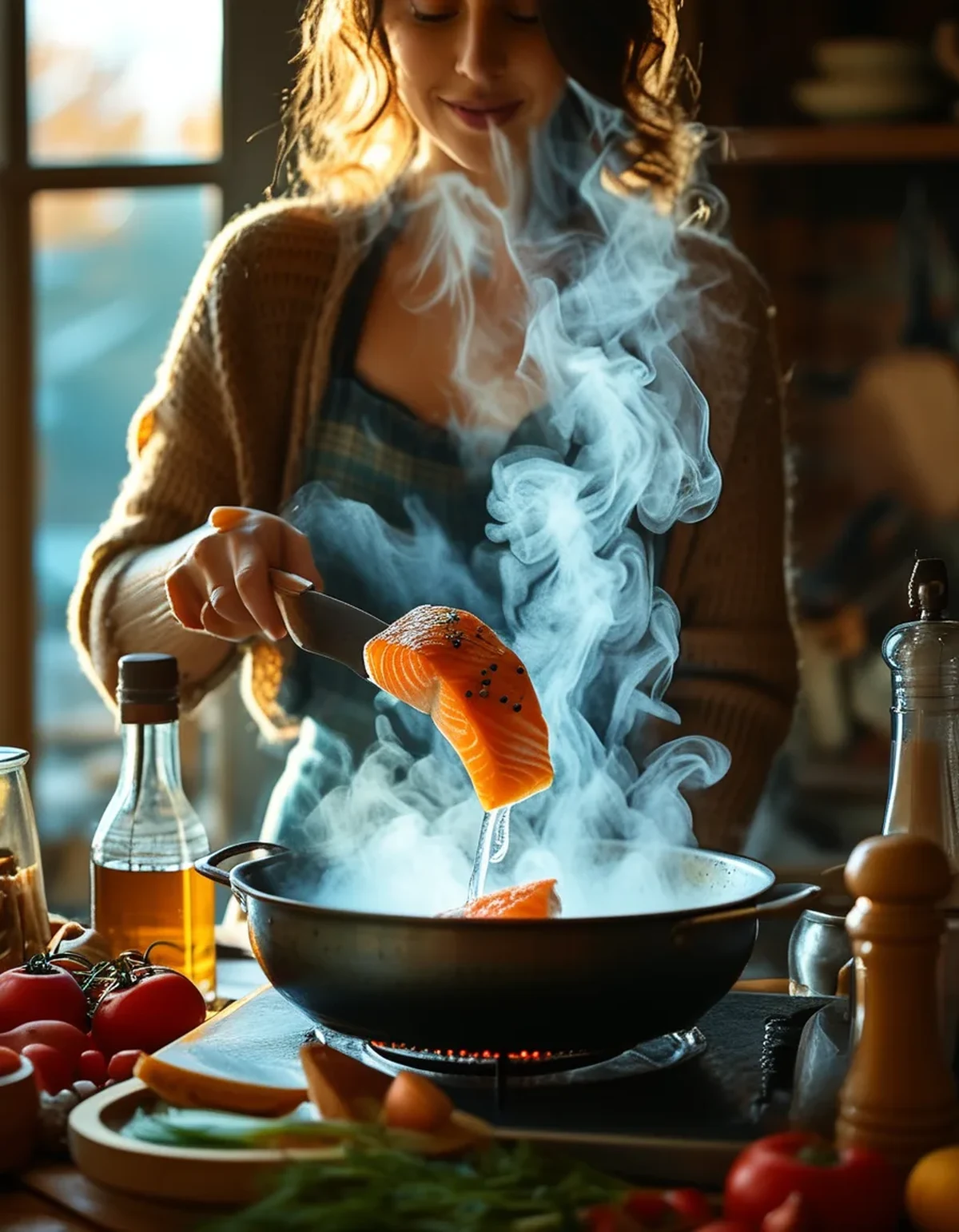
Fish continues cooking after it leaves the pan, and how much depends entirely on the temperature of what it lands on. A cold plate in a cold kitchen means considerably less carryover than the recipe assumed when it gave you a time.
The fix: warm the plates. Thirty seconds under hot water or two minutes in a low oven is enough. This is why fish that was perfect in summer arrives slightly underdone in autumn on identical timing — the carryover that used to finish it is no longer happening, and people respond by leaving it in the pan longer, which produces the opposite problem the following week.
5. Oil behaves differently
Cold oil is more viscous and spreads less evenly, which produces hot and cold patches across the pan surface and a fillet that browns in three places and sticks in two.
The fix: heat the pan first, then add the oil, then wait for it to shimmer. Adding cold oil to a cold pan and heating them together gives you no reliable temperature signal at all. Use enough oil to make full contact with the fillet as well — a thin film in a cold kitchen leaves dry spots where the fish grips bare metal.
Changes 6 and 7: what about timing and seasoning?
6. Cooking times shift for thick pieces
A whole fish or a thick fillet from a colder fridge needs meaningfully longer, and the difference is larger than for thin fillets because the centre is further from the heat and starting from lower down.
The fix: cook to internal appearance rather than to a timer. Flesh that has just turned opaque and separates easily is done; anything past that point is overcooked and there is no recovering it. Rest thick pieces for two to three minutes — even with reduced carryover, the temperature gradient needs time to even out across the fillet.
7. Your seasoning reads differently
Warm dishes carry aroma better than cool ones, and fish plated onto a cold plate in a cool room loses its aroma remarkably fast. The dish tastes underseasoned when in fact it is simply not releasing anything.
The fix: finish with acid and fat at the table. A squeeze of lemon and a spoon of warm butter or good oil at the moment of serving does far more than extra salt during cooking. Fresh herbs added off the heat also survive better in a cool room than herbs cooked into the dish, where their volatile compounds have already been driven off.
Myth vs Fact: Fish and Pan Temperature
Myth: Fish sticks because the pan is not non-stick enough. Fact: It sticks because the surface dropped below searing temperature. Protein bonds to metal until a crust forms and releases it.
Myth: More oil stops sticking. Fact: Enough oil for full contact helps; more oil in a cool pan just fries the water coming out of the fish.
Myth: You should move the fillet to check it. Fact: Moving it before it releases is what tears the skin. A properly seared fillet releases itself.
Myth: Thin fillets need no resting. Fact: They need less, not none, and thick pieces genuinely need two to three minutes.
Myth: Cooking times in recipes are absolute. Fact: They assume a warm kitchen, a warm plate and a specific starting temperature, all three of which change in autumn.
Myth: Frozen fish cooks the same as fresh. Fact: It carries more surface moisture after thawing, which makes drying the surface even more important in a cold kitchen.
FAQ: Cold Kitchen Fish Questions, Answered
Why does my fish stick now when it never used to?
Almost always a pan-temperature problem. A cold kitchen plus a cold fillet drops the pan below searing temperature, so the fish steams and grips instead of releasing.
Should I bring fish to room temperature first?
Take the deep chill off for about fifteen minutes. Do not leave it out for long periods.
How do I get crisp skin in autumn?
Dry surface, hot heavy pan, enough oil, and salt on the skin ten minutes ahead. Surface moisture is the main obstacle.
Do I need to change cooking times?
For thick pieces and whole fish, yes, and for carryover cooking, definitely. Warm your plates to restore some of it.
Why does my fish taste blander in cold weather?
Cool plates and cool rooms release less aroma. Finish with acid and fat at the table rather than adding more salt during cooking.
Is a heavier pan really better?
In a cold kitchen, meaningfully so. Thermal mass is what keeps the surface hot when a cold fillet lands on it.
TL;DR:
- Fish is thin and delicate, which makes it the protein most sensitive to a cold kitchen.
- A cold pan plus a cold fillet drops below searing temperature, so the fish steams and sticks.
- A dry surface is the main determinant of crisp skin; pat dry and salt the skin ahead.
- Carryover cooking slows in a cold room, so warm the plates to restore it.
- Heat the pan first, then the oil, and use enough to make full contact.
- Finish with acid and fat at the table, where the aroma still has somewhere to go.
The recipe assumed a warm kitchen. Give it one, or adjust for the one you have.
Keep Reading
This article is for general informational purposes only and is not medical advice. Always consult a qualified health professional for guidance specific to you.