7 Seafood Mistakes That Ruin Fish Before It Ever Hits the Pan
Quick Answer: Fish usually fails before cooking starts. Buy by smell and firmness rather than the label, keep it at 32-34F on ice instead of the middle fridge shelf, and dry the surface hard before heat. Fix those three and the pan stops being the problem.
You did everything right. Good pan, hot oil, patience. The fish still came out flat and slightly mushy, and you assumed you overcooked it. You probably didn’t. The damage happened somewhere between the counter and the cutting board, and none of it is dramatic enough to notice while it’s happening.

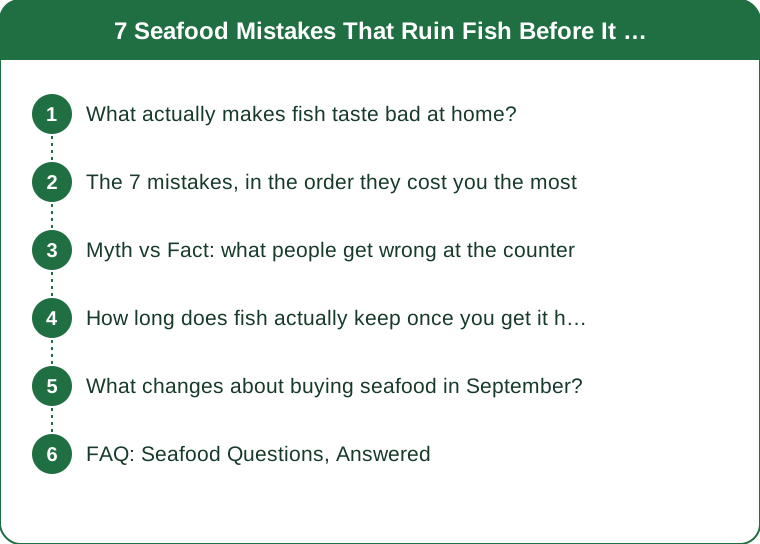
What actually makes fish taste bad at home?
Fish doesn’t spoil the way meat does. It degrades. Enzymes in the flesh keep working after the fish is landed, breaking proteins down into compounds that read as soft texture first and off flavor second. Temperature is the only real lever you have over that clock.
Every hour a fillet spends at 40F instead of 32F roughly doubles the rate of that breakdown. Your fridge door is around 45F. The middle shelf is around 38F. Neither is where fish wants to be.
So the seven mistakes below are all versions of the same problem: time and temperature you gave away without meaning to.
The 7 mistakes, in the order they cost you the most
1. Buying by the word fresh
The fish counter sign means the fish was never frozen. It says nothing about how long it has been thawing in a case. A fillet flown in eight days ago and never frozen is legally fresh and functionally past it. Ask when it came in, not whether it’s fresh.
2. Skipping the smell test
Good fish smells like clean seawater or almost nothing. A sharp ammonia note means the breakdown is well underway. This is the single most reliable test you have and it takes two seconds. Ask them to hold it closer.
3. Letting it ride home warm
Twenty minutes in a warm car costs you roughly a day of shelf life. Bring a cooler bag on grocery days when fish is on the list, or make the fish counter your last stop and go straight home.
4. Storing it on a shelf instead of on ice
Set the wrapped fillet in a shallow dish, pack ice or a frozen gel pack around it, and put the dish on the bottom shelf. You want 32-34F. Drain meltwater daily so the fish isn’t sitting in it.
5. Thawing frozen fish on the counter
Counter thawing lets the outside sit in the danger zone while the center is still solid, and the texture goes soft and watery. Thaw in the fridge overnight, or in a sealed bag under cold running water for 20-30 minutes.
6. Cooking it straight from wet
Surface moisture has to boil off before browning starts, so a wet fillet steams itself gray. Pat both sides dry, then leave it uncovered on a rack in the fridge for 15 minutes if you have them. It matters more than the oil you choose.
7. Salting way too early
Salt 40 minutes before cooking and it pulls moisture to the surface, which undoes the drying you just did. For thin fillets, salt right before the pan. For thick steaks, salt 10 minutes ahead at most.
Myth vs Fact: what people get wrong at the counter
Myth: Frozen fish is the compromise option.
Fact: Most fish is flash-frozen on the boat within hours of being caught, at temperatures no home freezer touches. That fish is often closer to its landed state than the never-frozen fillet three feet away. Frozen-at-sea is a quality claim, not an apology.
Myth: Clear eyes mean a whole fish is fresh.
Fact: Eyes cloud from handling and ice contact almost as fast as from age. Gills are the better tell. They should be bright red-pink and wet, not brown, gray, or slimy.
Myth: If it smells fishy you can rinse it off.
Fact: Rinsing moves the smell around and adds surface water you then have to dry off. If the smell is strong enough that you want to rinse, the fish already lost.

How long does fish actually keep once you get it home?
Lean white fish like cod, haddock, and halibut hold about two days on proper ice. Oily fish like salmon, mackerel, and sardines have more fat to go rancid and give you closer to one to two days. Shellfish is shorter still, and live shellfish should never be sealed in a plastic bag.
If you can’t cook it in that window, freeze it the day you buy it rather than the day it starts to turn. Wrap tight, press out the air, and use it within three months for lean fish and about two for oily.
Worth saying plainly: a day past those numbers isn’t automatically unsafe, it’s just no longer worth what you paid.
What changes about buying seafood in September?
Early fall is one of the better windows of the year. Water temperatures drop, more boats are running before winter weather, and the summer tourist demand that props up prices in coastal markets eases off after the first week of the month.
It’s also when you can start cooking fish the way cold weather likes it. Roasting a whole fish, braising thicker cuts, and chowders all forgive a fillet that isn’t perfect, which makes September a good month to try species you don’t usually buy.
Ask what came in that morning rather than what’s on sale. The two are occasionally the same thing, and that’s the day to buy.
FAQ: Seafood Questions, Answered
Can I trust supermarket fish or do I need a fishmonger?
You can. Supermarkets with a real service counter and daily turnover often beat a slow specialty shop. The question is turnover, not signage. Shop where the case looks picked over by late afternoon.
Is previously frozen fish worse than fresh?
Usually not, and sometimes better. What hurts previously frozen fish is a slow thaw in a display case, not the freezing itself. If you can buy it still frozen and thaw it yourself, do that.
How do I know when a fillet is done?
Pull it at 125-130F internal for most fish, or when a thin knife slides into the thickest part with no resistance. It keeps cooking off the heat. Waiting until it flakes easily in the pan means you’re eating it a few degrees past its best.
TL;DR:
- Buy on smell and firmness, and ask what day it arrived rather than whether it’s fresh.
- Get it to 32-34F fast and keep it there on ice, not on a fridge shelf at 38F.
- Thaw frozen fish in the fridge or under cold water, never on the counter.
- Dry the surface hard and salt late, so heat browns instead of steams.
None of this is technique, which is the good news. It’s a handful of small decisions in the hour before you cook, and it costs nothing to change them. Do the seven for a month and the fish you already know how to cook starts tasting like the fish you were hoping for.
Keep Reading
This article is for general informational purposes only and is not medical advice. Always consult a qualified health professional for guidance specific to you.