Why Frozen Fish at the Grocery Store Is Often Fresher Than What's Sitting at the Seafood Counter
Quick Answer: Frozen fish is often fresher than what’s at the seafood counter because commercial vessels flash-freeze the catch within hours at sea, while “fresh” counter fish may have traveled for days on ice. “Fresh” is a legal claim about never having been frozen — it says nothing about age. Ask for the catch date, and look for “frozen-at-sea” or FAS on the bag.
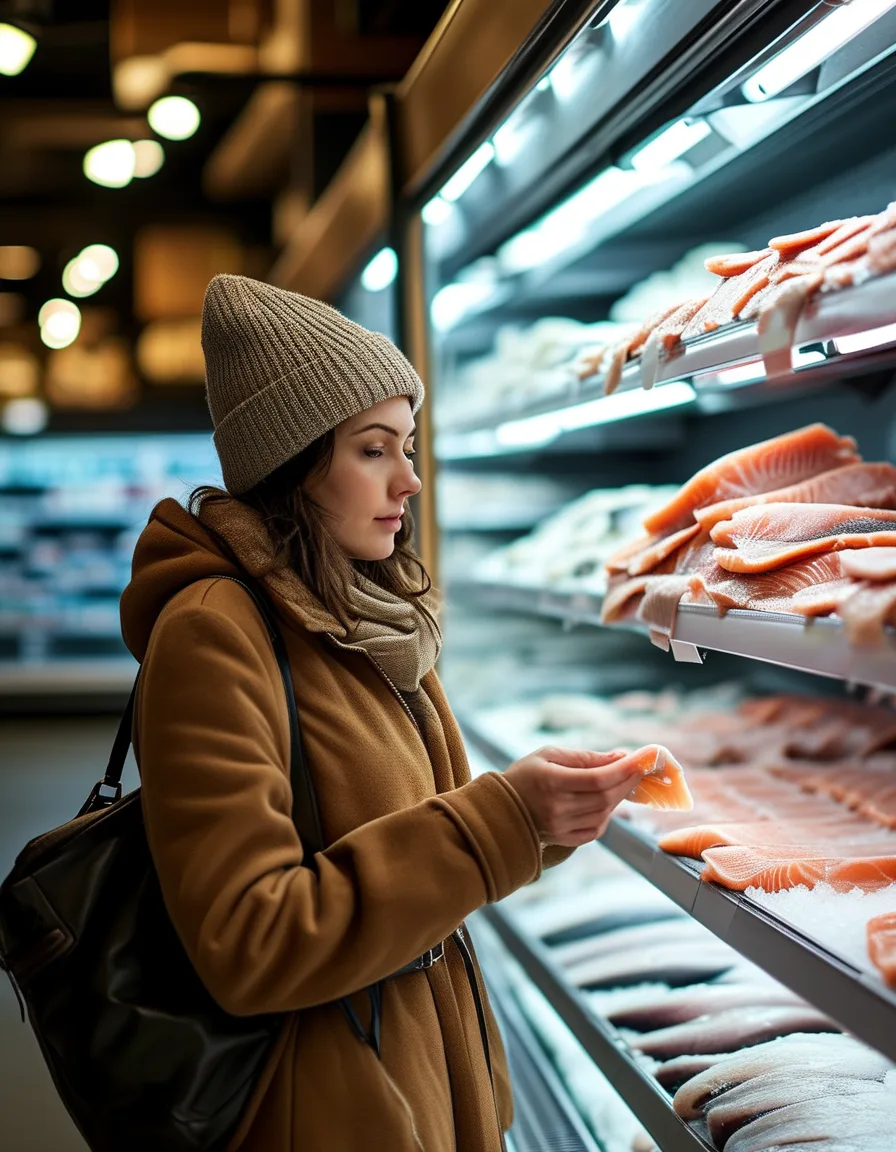
The fillet under the glass looks like the obvious better choice. It’s glistening. It’s on ice. It says fresh.
The bag in the freezer case three aisles over may have been frozen solid within four hours of leaving the water. The fillet under the glass has probably been traveling since last week.
How Does Flash-Freezing Keep Fish Fresher?
By stopping the clock at the best moment instead of slowing the decline afterward.
Commercial freezer trawlers process and freeze the catch onboard, often bringing fillets to around -30°F to -40°F within hours of the haul. That speed matters for a specific physical reason: fast freezing forms small ice crystals, while slow freezing forms large ones. Large crystals rupture cell walls, and ruptured cells leak moisture on thawing — which is exactly the mushy, watery texture people associate with “frozen fish.”
Blast-frozen fish keeps its cell structure largely intact. Held at 0°F or below, it stays in good condition for months.
Meanwhile, fish held on ice is still degrading, just slowly. Enzymatic breakdown and bacterial growth continue at refrigerated temperatures, and the practical quality window for most refrigerated fish is roughly 5–7 days from catch. If the boat spent 2–3 days at sea, plus a day at the processor and two in transit, that fillet under the glass may be most of the way through its window before it ever hits the display.
What Does “Fresh” Actually Mean on a Seafood Label?
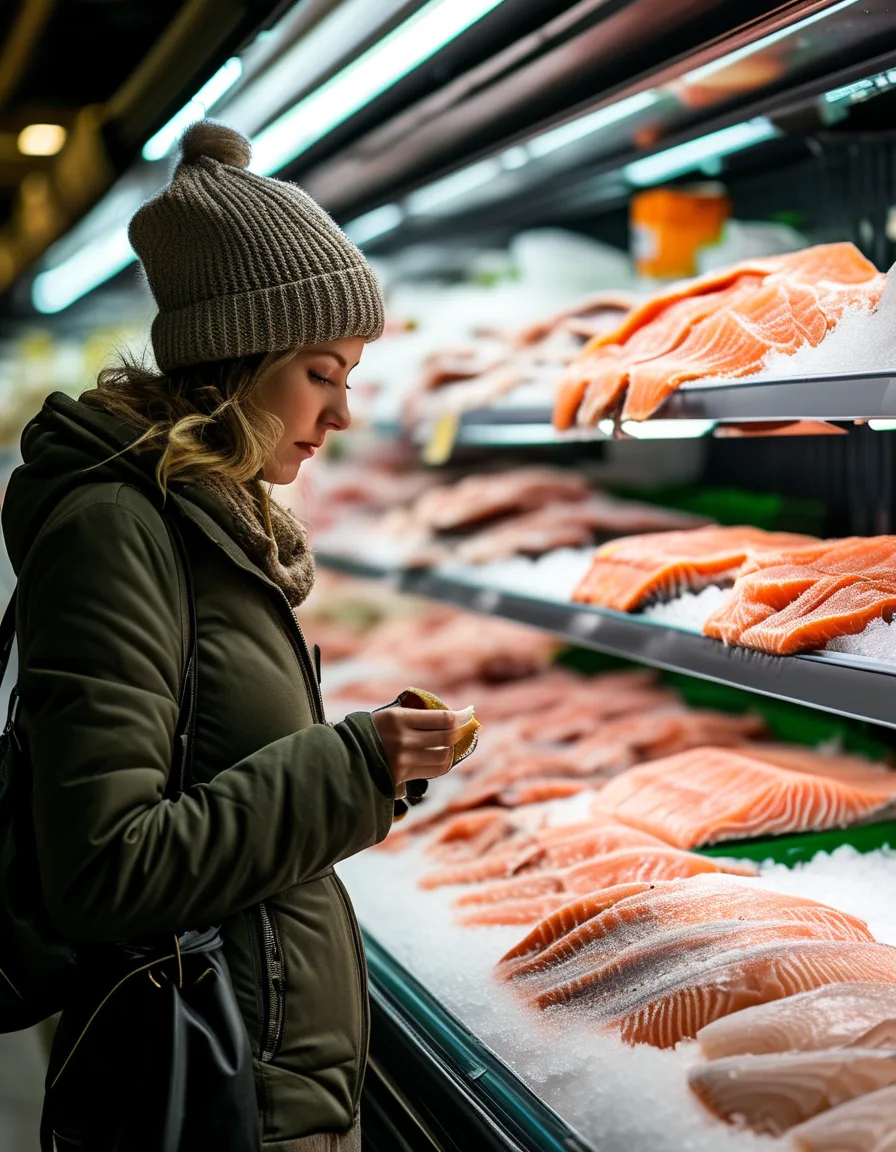
Less than you’d assume. “Fresh” means the fish has never been frozen. That’s it. It’s a claim about process history, not about age or quality.
A fillet caught nine days ago and kept properly on ice the whole time can be labeled fresh. A fillet frozen four hours after the haul cannot. The label draws a line in the wrong place for the question most shoppers are actually asking.
There’s a wrinkle worth knowing: a meaningful share of what’s in the counter case was previously frozen and thawed for display. That’s legal and it’s usually disclosed somewhere on a small placard, but it’s easy to miss. If it’s true, you’re buying frozen fish at fresh prices, with the added downside that it thawed on someone else’s schedule rather than yours — and you can’t refreeze it safely at home.
How Do You Tell If Fish Is Actually Fresh?
Stop shopping the category and start checking the timeline.
At the counter, ask two questions: “What day did this come in?” and “Was any of this previously frozen?” A good fishmonger answers both without hesitation, and the answers tell you far more than the display does.
Then use your senses. Fresh fish smells of clean sea water, not of fish. A sharp ammonia note means walk away. The flesh should spring back when pressed rather than holding a dent. Whole fish should have clear, slightly domed eyes and bright red gills — cloudy sunken eyes and brownish gills mean age.
In the freezer aisle, look for the labels that mean something: “frozen-at-sea,” “FAS,” or “flash frozen.” Those describe an actual process. Check the bag for ice crystals inside or frost on the fish itself, which signal a thaw-refreeze cycle somewhere in the supply chain.
Thaw it properly, because this is where most people undo the advantage. Overnight in the refrigerator, on a plate, ideally out of the vacuum packaging. Never on the counter at room temperature, and never in the sealed vacuum bag for a long slow thaw — that’s a botulism risk with certain packaged fish, which is why many bags say to remove the fish before thawing.
Myth vs. Fact
Myth: Frozen fish is lower quality than fresh. Fact: Frozen-at-sea fish is often higher quality than counter fish that’s been in transit for days. The category tells you nothing on its own — the timeline does.
Myth: The seafood counter is always fresher than the freezer aisle. Fact: In many inland stores the counter fish arrived frozen and was thawed on-site for display, which makes it strictly worse than buying the same fish still frozen.
Myth: You can refreeze thawed fish. Fact: You can refreeze fish thawed safely in a refrigerator, but the texture takes a real hit from the second round of ice-crystal formation. Buy frozen and thaw only what you’ll cook.
Myth: Frozen fish loses its nutrients. Fact: Freezing preserves protein and omega-3 fatty acids well. The nutritional difference between properly frozen and properly fresh fish is small enough not to drive the decision.
FAQ
How long does frozen fish last in the freezer?
Held consistently at 0°F, lean white fish like cod or haddock keeps well for about 6 months, and oily fish like salmon or mackerel for around 3 months, since their higher fat content is more prone to oxidation. It stays safe indefinitely at that temperature — the limits are about quality, not safety.
Is thawed fish sold at the counter safe to buy?
Yes, it’s safe — the issue is value and flexibility. You’re paying a counter price for fish that arrived frozen, and you need to cook it within a day or two rather than on your own schedule. If the same fish is available still frozen, that’s usually the better buy.
What’s the best way to thaw frozen fish quickly?
Sealed in a bag, submerged in cold water, changed every 30 minutes — most fillets thaw in 30–60 minutes this way. Don’t use warm water or leave it on the counter, since the surface reaches unsafe temperatures long before the center thaws.
General food-handling guidance. Follow your local food safety authority’s recommendations, and consult a doctor about seafood consumption if you’re pregnant, immunocompromised, or managing a health condition.
TL;DR:
- Frozen-at-sea fish is blast-frozen within hours of the catch, locking in texture before degradation starts
- “Fresh” is a legal claim meaning never-frozen — it says nothing about how many days old the fish is
- Much counter fish in inland stores was frozen and thawed for display, at a fresh price
- Ask for the catch date and whether it was previously frozen; look for “frozen-at-sea” or FAS on bags
- Thaw overnight in the fridge, out of vacuum packaging — never on the counter
Keep Reading
This article is for general informational purposes only and is not medical advice. Always consult a qualified health professional for guidance specific to you.