The Frozen Shrimp Thaw Mistake That Ruins the Texture Every Time
Quick Answer: Thaw frozen shrimp in a bowl of cold water for 15-20 minutes, never hot water or room-temperature counter thawing — both of those methods start cooking the outer layer while the inside stays frozen, ruining the texture before the shrimp even hits the pan.
You’ve grabbed a bag of frozen shrimp, run it under hot water to speed things up, and ended up with shrimp that turns rubbery and mushy the second it hits heat. The thaw method is almost always the real culprit, not the shrimp itself.

Why does hot water thawing ruin shrimp texture?
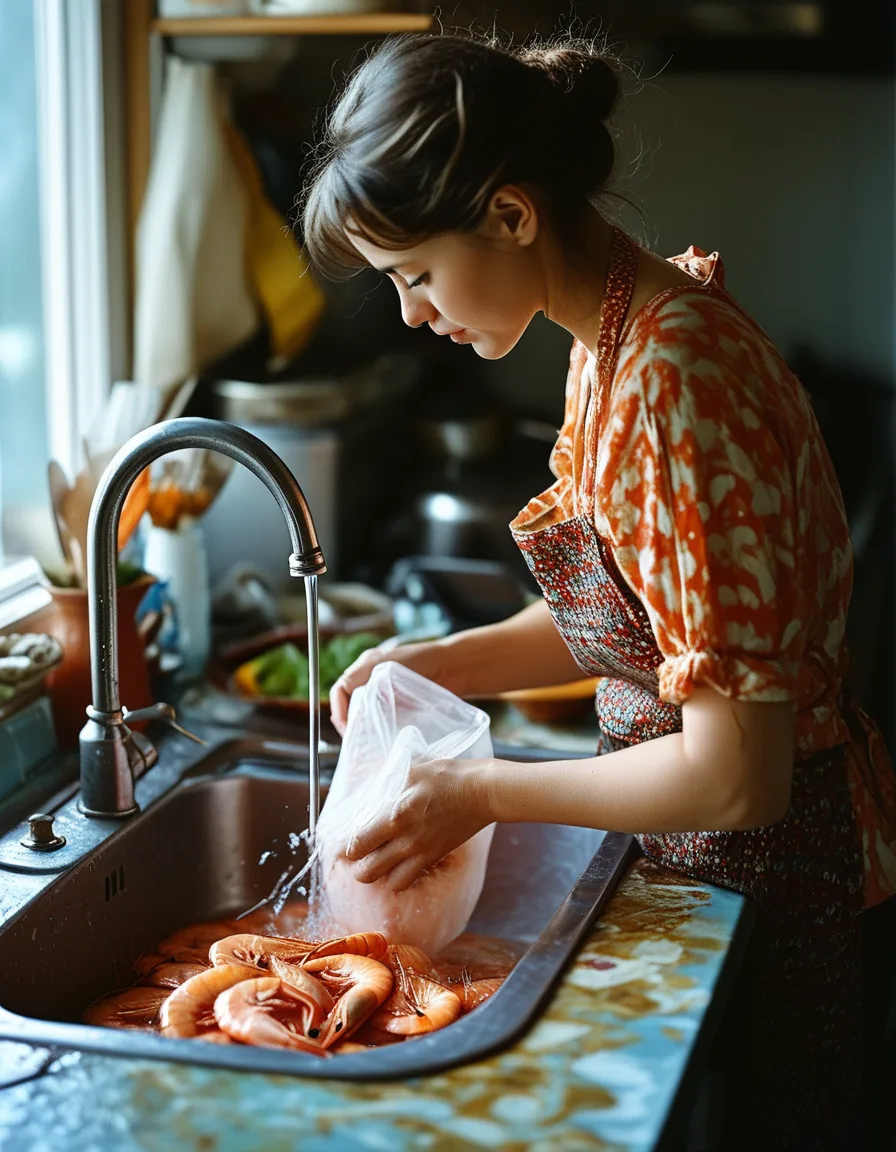
Hot water begins gently cooking the outer layer of the shrimp before the inside has even fully thawed, denaturing proteins unevenly and creating a rubbery, uneven texture once the shrimp is actually cooked later. This uneven partial-cooking is very hard to reverse, no matter how carefully you cook it afterward.
Counter-thawing at room temperature has a related but different problem: it thaws unevenly over a long period and lets the outer layer sit in the food-safety danger zone (above 40°F) for too long.
What’s the correct way to thaw frozen shrimp quickly and safely?
Place shrimp in a bowl and submerge them in cold tap water, changing the water every 10 minutes if needed — most shrimp fully thaw within 15-20 minutes this way, which is nearly as fast as the hot-water method but doesn’t damage texture. Keeping the water cold (not warm) is the key detail that prevents any partial cooking from starting.
Does thawing shrimp in the fridge overnight work better?
Yes, if you have the time — an overnight thaw in the refrigerator produces the best texture of all methods, since it’s slow and even with no risk of partial cooking or food-safety danger zone exposure. This is the ideal method when you know ahead of time you’ll be cooking shrimp the next day.
Should you thaw shrimp shell-on or shell-off?
Shell-on shrimp thaw slightly more evenly and retain a touch more moisture during the process, since the shell acts as a small protective barrier during the cold-water bath. If you’re using peeled shrimp, the cold-water method still works well — just keep a closer eye on timing, since peeled shrimp thaw a few minutes faster than shell-on.
What Nobody Tells You About Shrimp Texture
Most people blame overcooking for rubbery shrimp, but a bad thaw sets up texture problems before the shrimp ever touches a pan — even perfectly timed cooking afterward can’t undo damage from a hot-water or room-temperature thaw. This is why the same shrimp, thawed two different ways, can produce dramatically different results even when cooked identically.
A properly cold-thawed shrimp is also easier to season evenly, since the surface isn’t already partially cooked or waterlogged before seasoning goes on.
How can you tell when shrimp is fully thawed and ready to cook?
Fully thawed shrimp should be flexible and cool to the touch, not stiff or icy in the center — press gently at the thickest part; if it still feels hard or crunchy, it needs a few more minutes in the cold water. Pat thawed shrimp completely dry with paper towels before cooking, since excess surface water is what causes steaming instead of searing in a hot pan.
FAQ: Thawing Shrimp Questions, Answered
Can you cook shrimp directly from frozen without thawing at all?
Yes, for some methods like boiling or adding to soup, but for searing or sautéing, thawing first gives a much better texture and more even cooking than starting from frozen.
How long can thawed shrimp sit in the fridge before cooking?
Once thawed, shrimp should be cooked within 1-2 days for best quality and food safety, and should not be refrozen after thawing in cold water.
Does the size of the shrimp change thaw time?
Yes — smaller shrimp thaw in as little as 10 minutes in cold water, while jumbo or colossal shrimp can take closer to 20-25 minutes.
TL;DR:
- Hot water and counter thawing partially cook shrimp and ruin the final texture
- A 15-20 minute cold water bath is the fastest safe method that preserves texture
- Overnight fridge thawing gives the best results when you have the time
- Pat shrimp fully dry before cooking to get a sear instead of a steam
The difference between rubbery and perfectly firm shrimp often comes down to 15 minutes of cold water, not anything that happens once it hits the pan.
Keep Reading
This article is for general informational purposes only and is not medical advice. Always consult a qualified health professional for guidance specific to you.