How to Tell When Fish Is Actually Done: the 3 Signals That Beat Every Timer
Quick Answer: Fish is done when it turns from translucent to just-opaque and flakes under gentle fork pressure at the thickest point — and it keeps cooking off the heat, so the correct move is pulling it at ‘barely there’ and letting carryover finish the job. Most home fish is overcooked by 2-3 minutes, which is the entire origin story of ‘I don’t like fish.’ Learn three signals — opacity, flake, and the 10-minutes-per-inch estimate as a starting guess — and dry fish leaves your kitchen forever.
The fish-cooking fear loop goes: worried about undercooking → cook ‘a little extra to be safe’ → dry, cottony fillet → ‘we’re not really fish people.’ The safety instinct is fine; the execution is backwards — the extra minutes weren’t a margin of safety, they were the mistake itself.

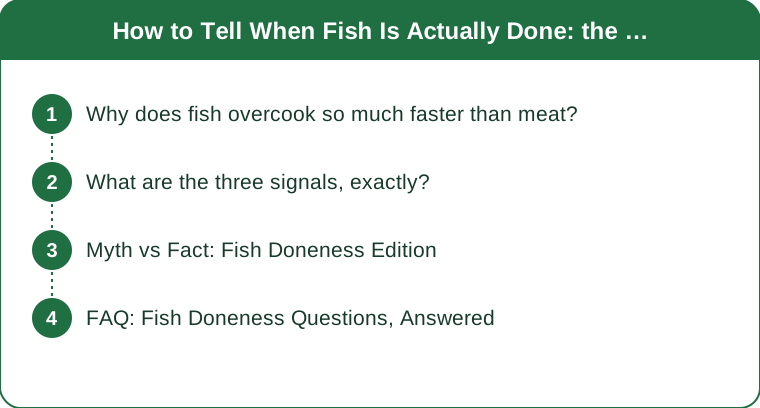
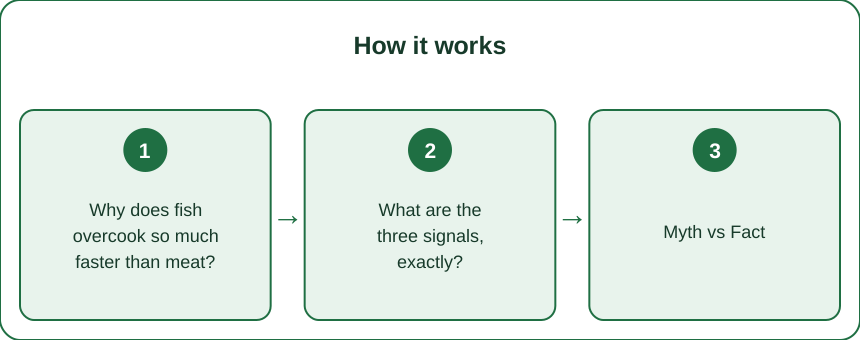
Why does fish overcook so much faster than meat?
Structure, in one paragraph: fish muscle is built for water — short delicate fibers, minimal connective tissue, and proteins that finish cooking at lower temperatures than land meat. There’s no collagen safety net that slow-cooks into tenderness; past done, the proteins just clench and wring their moisture out. The window between ‘silky’ and ‘dry’ can be 90 seconds on a thin fillet.
Add carryover cooking — the residual heat that keeps the interior climbing after you pull it — and the timer-trusting cook overshoots systematically: the fillet that looked perfect in the pan plates as overdone, because ‘perfect in the pan’ meant ‘overdone in three minutes.’
The professional habit this produces: cooks pull fish at the first sign of doneness at the thickest point, accepting a barely-undercooked center that carryover finishes on the plate. Home cooks aiming for visibly-done-everywhere in the pan are aiming past the target by design.
What are the three signals, exactly?
1. The opacity read (watch it happen): raw fish flesh is translucent; cooked is opaque. On a fillet in the pan, you can literally watch the opaque front climb the side — pull when the thickest part shows just a trace of translucence at the very center (salmon: a deeper rosy center is a feature, not a risk—see FAQ). Fully chalk-opaque throughout in the pan = already past it.
2. The flake test (gentle, at the thickest point): press a fork at an angle into the thickest section and twist slightly — done fish separates along its natural seams with easy pressure; underdone resists and clings; overdone doesn’t flake so much as crumble. The test costs one small blemish on presentation and saves the whole fillet.
3. The 10-minutes-per-inch starting guess: the old rule — measure the fillet at its thickest, estimate ~10 minutes per inch of thickness (总, across whatever method) — is a scheduling tool, not a doneness verdict: it tells you when to start checking signals 1 and 2, typically a couple of minutes before the math says done.
And the thermometer, for the calibration phase: an instant-read at the thickest point removes all anxiety while you learn — pull white fish around 130-135°F/54-57°C and let carryover drift it upward (the official 145°F/63°C figure is the conservative end-state that carryover reaches, not the pull temperature that eating-quality argues for; food-safety contexts and vulnerable eaters warrant the official line). A few calibrated sessions teach your eyes what the numbers look like — then the thermometer retires to special occasions. This is general information, not medical advice.

Myth vs Fact: Fish Doneness Edition
Myth: Fish should flake completely and fall apart when done. Fact: ‘Flakes easily’ means separates when asked — the fully-self-disassembling fillet is the overcooked one. The target texture holds together on the spatula and yields to the fork.
Myth: Any pinkness in fish means undercooked. Fact: Species-dependent — salmon and trout are prized with rosy, silky centers (restaurant salmon runs noticeably pinker than home cooks dare), and tuna is routinely served rare-centered by design. The chalk-white-throughout standard belongs to a subset of white fish, not the category. (Raw-serving and rare-serving contexts carry their own sourcing and safety rules — that’s the fishmonger-and-guidelines conversation.)
Myth: Skin-on fish is harder to judge. Fact: Easier — skin-side-down cooking lets you watch the opacity front climb the fillet’s side like a fuel gauge, and the skin buffers the heat into gentleness. The crisp-skinned, mostly-cooked-from-one-side fillet is both the easiest doneness read and the best texture in home fish cooking.
The confidence reframe: fish is actually the fastest feedback loop in protein cookery — 10 minutes per attempt, visible doneness signals, weekly practice affordable — which is why the ‘fish is hard’ reputation inverts with about three attentive sessions.
FAQ: Fish Doneness Questions, Answered
My fish is always dry even when I pull it early — what else is wrong?
Audit the heat and the thickness: blazing pans overshoot thin fillets before any signal appears (medium heat gives you a readable window), and very thin pieces (under 2cm) fare better with gentler methods — oven-baked, poached, or the skin-down-mostly approach — than with aggressive pan-searing. Also check the resting plate: tented foil over thin fish keeps carryover cooking it; loose is enough.
Does the flake test work for thick steaks like halibut or swordfish?
Yes with patience — thick cuts need the fork check deeper and benefit most from the thermometer during learning (their exteriors look done long before centers arrive). The 10-per-inch estimate earns its keep precisely here: a 2-inch swordfish steak is a ~20-minute project, not a 8-minute one.
Frozen fillets — same rules?
Same signals, adjusted schedule: properly thawed (overnight in the fridge) fillets behave identically; cooking from frozen (a legitimate weeknight method) roughly extends time ~50% and shifts you toward gentler heat — the signals still call the finish, the clock just starts later. Pat everything dry either way; surface water is the enemy of both crust and timing.
TL;DR:
- Fish overcooks because it’s built delicate and keeps cooking after the pan — pull at ‘barely there’ and let carryover finish
- Three signals: trace-of-translucence at the center, gentle-flake at the thickest point, 10-minutes-per-inch as the when-to-start-checking guess
- Thermometer for the learning phase (~130-135°F pull for white fish), eyes thereafter; pink salmon centers are a feature
- Dry fish is a timing story, not a talent story — three attentive sessions rewrite it
‘We’re not fish people’ was always a translation of ‘we’re three-minutes-over people’ — and that’s the most fixable food opinion in the kitchen. This is general information, not medical advice.
Keep Reading
This article is for general informational purposes only and is not medical advice. Always consult a qualified health professional for guidance specific to you.