7 Things That Turn Perfectly Good Shrimp Into Rubber
Quick Answer: Rubbery shrimp is almost always an overcooking problem — shrimp cook in just 2-4 minutes total and go from tender to tough within a narrow window, so the seven mistakes below (high heat left too long, overcrowding the pan, cooking from frozen, and more) all come back to the same root cause: time and temperature control.
None of these require a different technique overall, just tighter attention to a few specific moments.

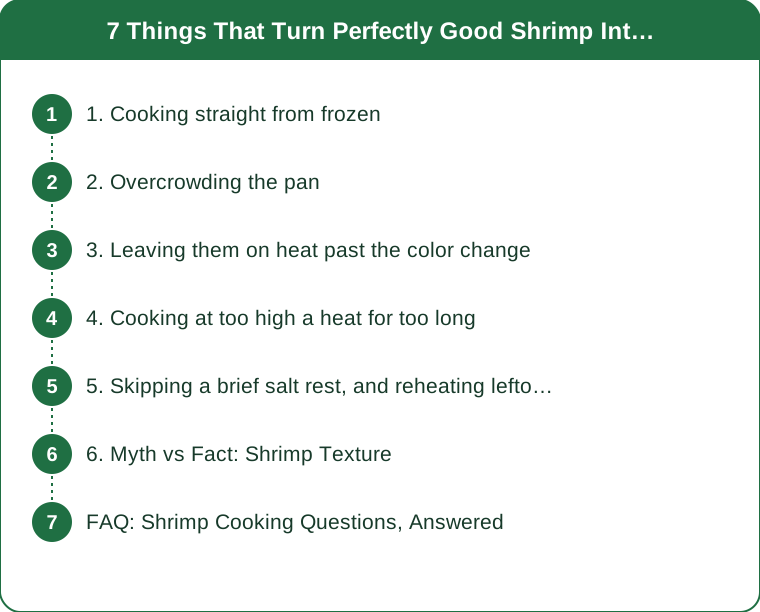
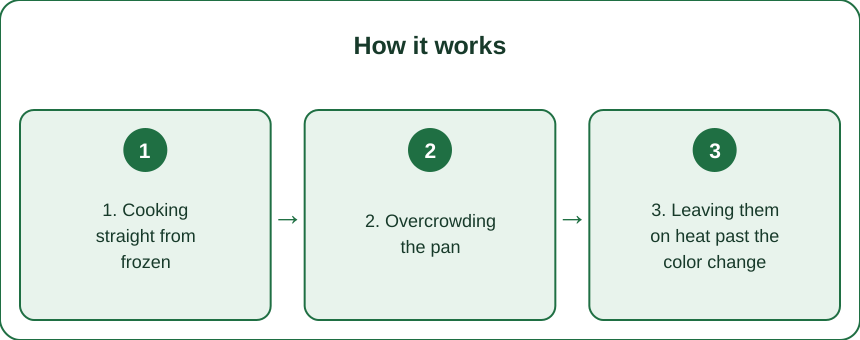
1. Cooking straight from frozen
Frozen shrimp release extra water as they cook, which lowers the pan temperature and extends cook time unpredictably. Thawing fully first (a quick cold-water bath works in 10-15 minutes) gives far more control over the actual cook time.
2. Overcrowding the pan
Too many shrimp at once drops the pan’s temperature and causes steaming instead of searing, which extends cook time and toughens texture. Cooking in batches, leaving space between each piece, keeps heat consistent and cook time short.
3. Leaving them on heat past the color change
Shrimp turn opaque and pink/orange within about 2-3 minutes per side depending on size — that color change is the actual doneness signal. Cooking even 60-90 seconds past that point is often the entire difference between tender and rubbery.

4. Cooking at too high a heat for too long
High heat sears well initially but keeps cooking the interior fast, giving very little margin for error. Medium-high rather than max heat, with close attention near the end, gives more control over that narrow doneness window.
5. Skipping a brief salt rest, and reheating leftovers on high heat
A short salt rest (15-20 minutes) before cooking helps shrimp retain moisture during the cook, similar to brining other proteins — skipping this step means less margin for error if they cook even slightly too long. Reheating leftover shrimp compounds the risk further: since they’re already fully cooked once, reheating on high heat cooks them a second time past their ideal point almost immediately — a gentle reheat (low heat, short time, or added to a dish off direct heat) avoids doubling down on overcooking.
6. Myth vs Fact: Shrimp Texture
Myth: bigger shrimp are more forgiving and harder to overcook. Fact: size affects timing but not the fundamental risk — any size shrimp can go rubbery within roughly the same narrow window relative to its size.
Myth: rubbery shrimp means the shrimp itself was low quality. Fact: even the best-quality shrimp turns rubbery with a minute or two of overcooking — texture is almost entirely a cooking-technique outcome, not a quality one.
FAQ: Shrimp Cooking Questions, Answered
What’s the actual visual sign that shrimp is perfectly done?
An opaque white/pink color throughout and a loose ‘C’ shape — a tight ‘O’ curl is a common sign of overcooking.
Does the cooking method (grill, saute, boil) change the overcooking risk?
The risk is similar across methods since it’s about total time at heat, but grilling and boiling can be slightly less forgiving due to less direct visual monitoring than sauteing.
Can rubbery shrimp be fixed once it’s already overcooked?
Not really — texture-wise it’s mostly a one-way street, though incorporating overcooked shrimp into a sauce or soup can mask the texture somewhat.
TL;DR:
- Rubbery shrimp almost always comes down to time and temperature, not the shrimp’s quality
- Thawing fully, avoiding overcrowding, and watching for the color-change cue all extend the margin for error
- A brief salt rest before cooking helps retain moisture during the short cook window
- Reheating leftover shrimp on high heat is a common second chance to overcook it
Shrimp’s cook window is short but predictable — watch for the color and shape change rather than a fixed clock, and rubbery texture becomes far less common.
Keep Reading
This article is for general informational purposes only and is not medical advice. Always consult a qualified health professional for guidance specific to you.