7 Things That Turn Perfectly Good Fish Into Fishy-Tasting Fish (Ranked)
Quick Answer: ‘Fishy’ taste is almost never about the fish being old — it’s usually about how it was stored, thawed, or cooked. Fix the top 2 (thawing method and pan temperature) before assuming the fish itself was bad.
You bought fish that looked and smelled completely fine at the counter. By the time it hit your plate, it tasted unmistakably ‘fishy’ in the way that makes people swear off cooking fish at home. Here are the 7 most common reasons, in order of how often they’re the real cause.

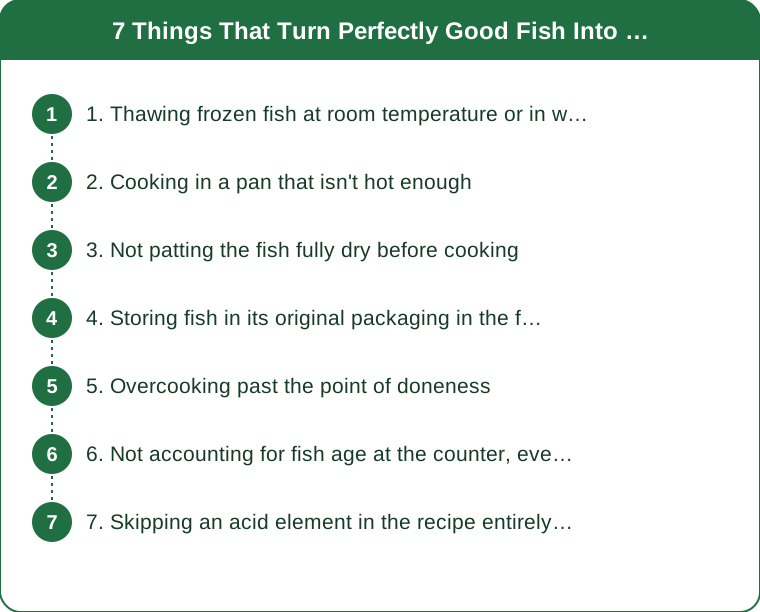
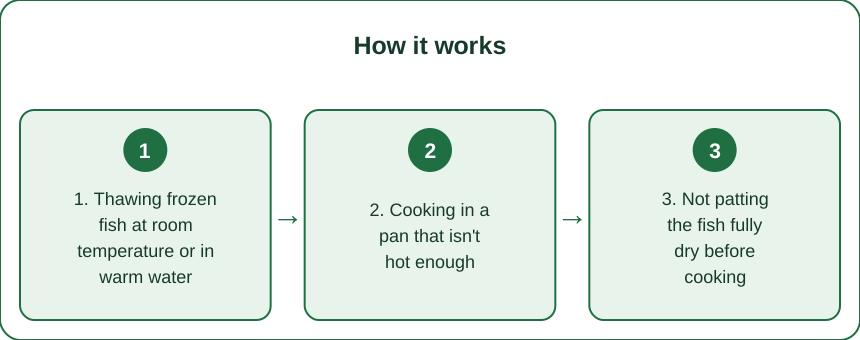
1. Thawing frozen fish at room temperature or in warm water
This is the single biggest cause. Thawing outside the fridge lets the surface of the fish sit in the temperature danger zone long enough for trimethylamine — the compound responsible for ‘fishy’ smell — to build up rapidly, even while the center is still frozen. Always thaw fish in the refrigerator overnight, or in a sealed bag under cold running water if you’re short on time.
2. Cooking in a pan that isn’t hot enough
A too-cool pan means the fish releases moisture and sits in it while slowly coming up to temperature, rather than searing quickly. That prolonged low-heat contact intensifies fishy compounds and also causes sticking and a mushy texture. Preheat the pan properly — a drop of water should sizzle and evaporate almost instantly before the fish goes in.
3. Not patting the fish fully dry before cooking
Surface moisture left on fish steams instead of sears, again trapping and concentrating the same compounds that read as ‘fishy,’ and it also prevents any browning or crust from forming. A thorough pat-dry with paper towels, right before it hits the pan, makes a noticeable difference.

4. Storing fish in its original packaging in the fridge for more than a day
Original packaging is designed for short-term transport, not fridge storage. Fish stored in it for 2+ days sits in its own trapped moisture and juices, accelerating both odor and quality decline. Transfer fish to a container with ice or a paper-towel-lined plate, loosely covered, if you’re not cooking it the same day.
5. Overcooking past the point of doneness
Overcooked fish doesn’t just get dry and tough — it also releases more of its natural compounds into the air and onto the surface, intensifying smell and taste in a way that reads as overly ‘fishy’ compared to a piece cooked to just-opaque doneness.
6. Not accounting for fish age at the counter, even if it ‘looks fine’
Fish can look visually acceptable for a day or two past its genuine freshness peak, especially under store lighting. Buying from a high-turnover counter, or asking specifically what day it arrived, avoids fish that’s several days past ideal even though nothing about its appearance flagged it.
7. Skipping an acid element in the recipe entirely — and Your Fishy Taste FAQ
This isn’t about masking bad fish, but a small squeeze of lemon or lime, added near the end of cooking, chemically interacts with trimethylamine compounds and measurably reduces the perception of fishy taste and smell — a classic culinary trick with real chemistry behind it, not just flavor preference.
Is frozen fish worse for fishy taste than fresh counter fish?
Not inherently — properly flash-frozen fish, thawed correctly in the fridge, is often fresher in practice than ‘fresh’ counter fish that’s been sitting several days since catch.
Does soaking fish in milk really remove fishy taste?
There’s some truth to it — casein in milk can bind to trimethylamine and reduce smell somewhat, though proper thawing and cooking technique address the root cause more reliably.
How can I tell if fish has gone properly bad versus just being handled poorly?
Genuinely spoiled fish has a strong ammonia-like smell, slimy texture, and dulled color — mild fishiness from handling issues is a milder, different problem and the fish is still safe to eat.
TL;DR:
- Thawing at room temperature is the #1 cause of fishy-tasting fish, not the fish’s actual age
- A properly hot pan and thoroughly dried fish prevent most of the rest
- A squeeze of citrus near the end of cooking chemically reduces fishy compounds
- Don’t blame the fish before checking how it was thawed and cooked
Next time, thaw in the fridge overnight and make sure your pan is properly hot before the fish goes in — those two fixes solve most fishy-taste complaints on their own.
Keep Reading
This article is for general informational purposes only and is not medical advice. Always consult a qualified health professional for guidance specific to you.