7 Things That Make Fish Taste 'Fishy' — That Have Nothing to Do With Freshness
Quick Answer: A strong ‘fishy’ taste is usually caused by cooking technique, not fish freshness: overcooking, skipping an acid rinse, or cooking at too low a temperature all concentrate compounds that read as fishy, even in fresh fish.
You bought fish that smelled completely clean at the counter, and it still tasted strongly fishy on the plate. Before you blame the fishmonger, check these 7 things — most fishy taste is made in the kitchen, not the ocean.

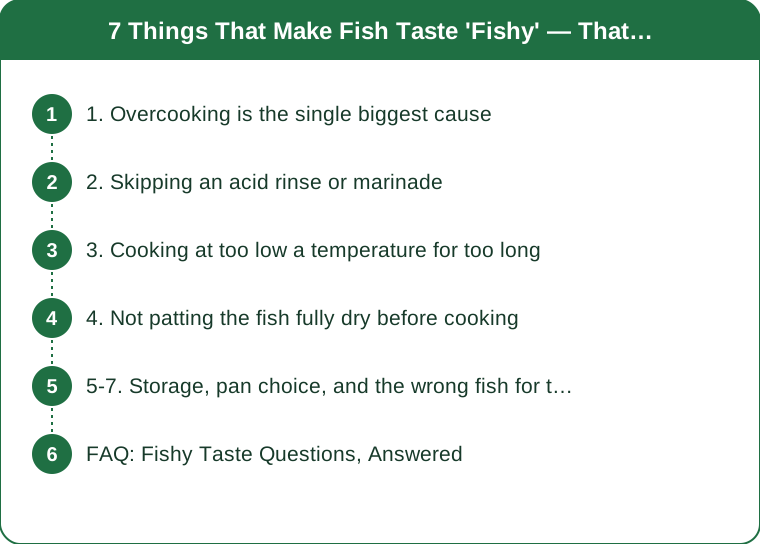
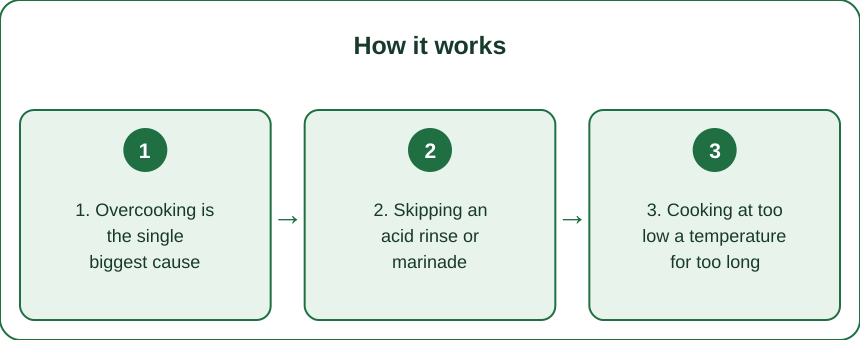
1. Overcooking is the single biggest cause
Fish cooked past its ideal internal temperature releases more trimethylamine oxide breakdown compounds — the exact molecules responsible for ‘fishy’ smell and taste. Most white fish is done at a lower internal temp than people expect; pull it just as it turns opaque and flakes easily, not minutes after.
2. Skipping an acid rinse or marinade
A quick rinse or short marinade in lemon juice, lime, or vinegar before cooking neutralizes some of the fishy-tasting compounds through a mild chemical reaction — a step many home cooks skip entirely.
3. Cooking at too low a temperature for too long
Low-and-slow works for some proteins but often backfires with fish, giving trimethylamine more time to develop stronger flavor. A hot, quick sear or bake usually tastes cleaner than a gentle extended cook.

4. Not patting the fish fully dry before cooking
Excess surface moisture steams the fish instead of searing it, trapping compounds against the surface instead of letting them cook off — always pat fillets dry with a paper towel first.
5-7. Storage, pan choice, and the wrong fish for the wrong method
5. Storage: Fish stored too long, even refrigerated, in its original packaging without proper icing accelerates fishy-compound development faster than most people realize.
6. Reactive cookware: Cooking fish in an uncoated cast iron or aluminum pan can react with the fish’s natural compounds and intensify off-flavors — nonstick or stainless steel is usually a cleaner choice.
7. Method mismatch: A strong-flavored fish like mackerel prepared with a delicate method (poaching) tastes more intensely fishy than the same fish grilled or blackened, which better balances the flavor.
FAQ: Fishy Taste Questions, Answered
Does soaking fish in milk actually reduce fishy taste?
Yes — casein protein in milk binds to some of the fishy-tasting compounds and can be rinsed away, a genuinely useful traditional technique for stronger-flavored fish.
Is fishy taste always a sign of spoilage?
Not necessarily — a mild natural fish flavor is normal, but a sharp ammonia-like smell is a real spoilage sign and that fish should be discarded regardless of cooking technique.
Does frozen fish taste fishier than fresh?
Not inherently — properly flash-frozen fish is often fresher at the point of freezing than ‘fresh’ counter fish that’s been sitting for days, so freezing itself isn’t the fishy-taste culprit.
TL;DR:
- Overcooking is the biggest cause of fishy taste, more than freshness itself
- An acid rinse or short marinade neutralizes some fishy-tasting compounds before cooking
- Pat fish dry, cook hot and quick, and match strong-flavored fish to bolder methods
- A sharp ammonia smell (not mild fishiness) is the real spoilage signal to watch for
Most fishy taste starts at the stove, not the fish counter.
Keep Reading
This article is for general informational purposes only and is not medical advice. Always consult a qualified health professional for guidance specific to you.