7 Things That Actually Explain Why Farmed Fish Tastes Different From Wild
Quick Answer: Farmed and wild fish taste different mainly due to diet, fat content and distribution, exercise level affecting texture, and water conditions — farmed fish tend to have a milder, fattier, more consistent flavor from controlled feed, while wild fish often taste leaner and more variable depending on what they’ve eaten in open water.
Same species, same cooking method, same plate — and yet one tastes cleaner and more mineral, the other richer and more uniform. Here’s what’s actually driving that difference.
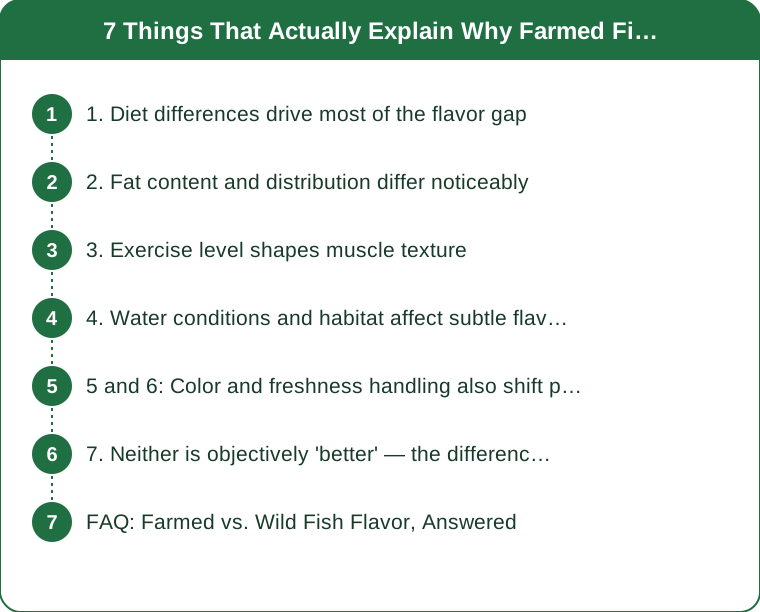
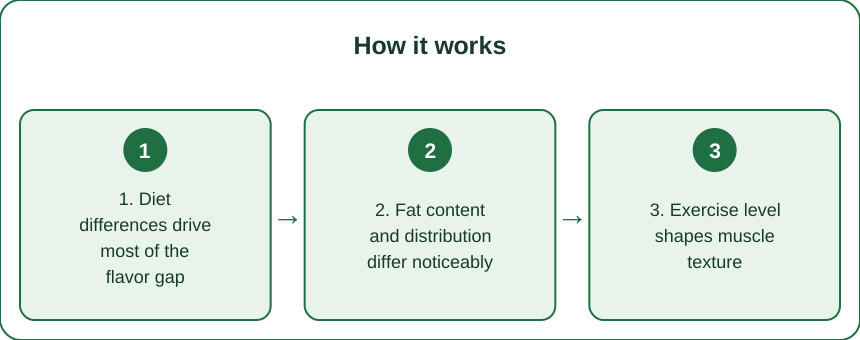
1. Diet differences drive most of the flavor gap
Farmed fish eat a controlled, consistent feed formulated for growth and fat content, while wild fish eat whatever’s naturally available in their environment (smaller fish, crustaceans, algae depending on species), and since diet directly shapes the fat composition and subtle flavor compounds in fish flesh, this is generally considered the single biggest driver of the taste difference between the two.
2. Fat content and distribution differ noticeably
Farmed fish are typically fattier overall, with fat distributed more evenly through the flesh due to controlled feeding and limited movement, producing a richer, more buttery texture and taste, while wild fish tend to be leaner with fat concentrated in specific areas, giving a firmer texture and often a more pronounced, less uniformly rich flavor.
3. Exercise level shapes muscle texture
Wild fish swim significant distances against currents and predators, building denser, firmer muscle tissue, while farmed fish in enclosed pens move less, generally resulting in a softer, more tender texture — this textural difference often registers as much in the mouth as the actual taste does.
4. Water conditions and habitat affect subtle flavor notes
Wild fish absorb subtle flavor characteristics from their natural habitat and the minerals or algae present in that water, contributing to the ‘clean, mineral’ taste often associated with wild-caught fish, while farmed fish in controlled pens don’t pick up that same environmental variability, contributing to a more neutral, consistent flavor profile.
5 and 6: Color and freshness handling also shift perception
5. Color can differ, affecting perceived taste before the first bite
Farmed salmon, for example, is often given feed additives to achieve a consistent pink-orange color similar to wild salmon’s naturally occurring pigment from its crustacean diet, and color has a measurable psychological effect on flavor perception even when it doesn’t directly change the taste itself.
6. Time from catch or harvest to plate varies by supply chain
Farmed fish often reaches market faster and more predictably due to controlled harvest timing, while wild-caught fish supply chains can vary more in freshness depending on catch location and transport, and freshness itself significantly affects taste regardless of farmed or wild origin.
7. Neither is objectively ‘better’ — the differences suit different preferences
Farmed fish’s consistency and mild richness suits people who prefer a more approachable, predictable flavor and are newer to cooking fish, while wild fish’s leaner texture and more variable, pronounced flavor appeals to those who prefer a more distinct, less uniform taste — the differences are real and worth understanding, but they don’t point to one being universally superior.
FAQ: Farmed vs. Wild Fish Flavor, Answered
Is wild fish always more expensive than farmed?
Generally yes, due to the costs and unpredictability of wild harvesting compared to controlled farming, though prices vary by species, season, and region.
Does cooking method matter more or less depending on farmed vs. wild?
Leaner wild fish tends to dry out more easily and often benefits from slightly shorter cooking times or added fat, while fattier farmed fish is somewhat more forgiving of longer cooking, making cooking method adjustments worth considering based on which type is being prepared.
Can most people actually taste the difference in a blind comparison?
Many people can detect a difference, particularly in texture and richness, though correctly identifying which is farmed versus wild without other cues (like color or menu labeling) is less reliable than people often expect.
TL;DR:
- Diet is the single biggest driver of flavor differences between farmed and wild fish
- Farmed fish tends to be fattier and more evenly textured; wild fish leaner and firmer
- Water habitat contributes subtle mineral notes unique to wild-caught fish
- Neither type is objectively better — the differences suit different taste and cooking preferences
The farmed-versus-wild taste gap isn’t a quality judgment waiting to be settled — it’s seven specific, explainable factors that simply produce two genuinely different eating experiences from the same species.
Keep Reading
This article is for general informational purposes only and is not medical advice. Always consult a qualified health professional for guidance specific to you.