7 Shrimp Cooking Mistakes That Turn a Good Meal Rubbery
Quick Answer: The most common shrimp cooking mistakes are overcooking past the point of curling into a tight C-shape, cooking straight from frozen without properly thawing, overcrowding the pan, using too-low heat, skipping a pat-dry before searing, marinating too long in acidic ingredients, and not accounting for carryover cooking after removing from heat.
Shrimp cooks in minutes, which leaves very little margin for error — these seven mistakes are the most common reasons a quick dish turns out disappointingly rubbery.

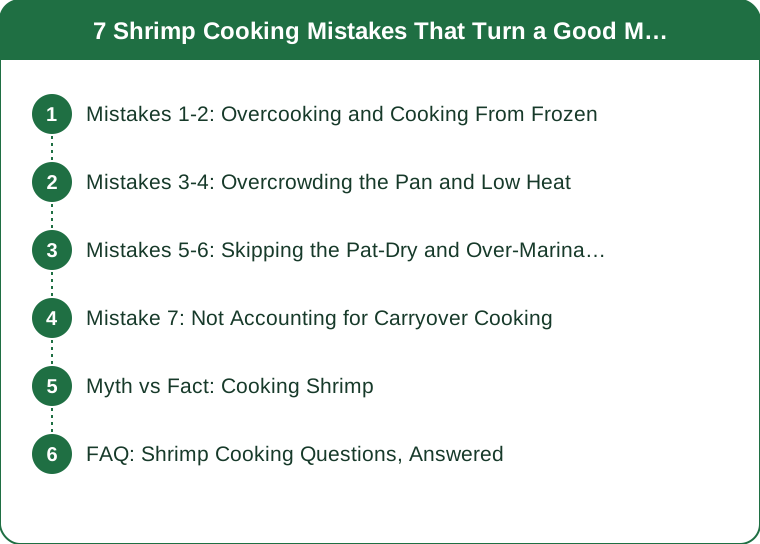
Mistakes 1-2: Overcooking and Cooking From Frozen
Mistake 1: Overcooking past the tight C-curl
Properly cooked shrimp curls into a loose C-shape; a tight, cramped O-shape is a reliable visual sign of overcooking that’s already happened. Pulling shrimp off heat right as it turns opaque and curls loosely, rather than waiting for a fully tight curl, keeps texture tender rather than rubbery.
Mistake 2: Cooking straight from frozen without thawing
Frozen shrimp cooked directly releases excess water into the pan, which lowers the cooking temperature and leads to uneven, often tougher texture. A quick thaw under cold running water, just 10 to 15 minutes, makes a noticeable difference in the final result.
Mistakes 3-4: Overcrowding the Pan and Low Heat
Mistake 3: Overcrowding the pan
Too much shrimp in the pan at once causes steaming rather than searing, since the released moisture has nowhere to evaporate quickly. Cooking in batches, giving each shrimp room to actually contact the hot pan surface, produces a better sear and more even texture.
Mistake 4: Using too-low heat
Shrimp needs relatively high, fast heat to sear quickly before the interior overcooks — low heat extends cooking time and increases the odds of the exterior overcooking while waiting for proper doneness. Medium-high to high heat, with a properly preheated pan, is generally the better approach for stovetop shrimp.
Mistakes 5-6: Skipping the Pat-Dry and Over-Marinating
Mistake 5: Skipping a pat-dry before searing
Wet shrimp straight from thawing or rinsing releases even more moisture into a hot pan, working against a good sear the same way overcrowding does. A thorough pat-dry with a paper towel before cooking noticeably improves browning and texture.
Mistake 6: Marinating too long in acidic ingredients
Acidic marinades — lime juice, vinegar — start “cooking” shrimp chemically the longer they sit, similar to ceviche, which can leave shrimp with a mushy or overly firm texture by the time it hits actual heat. Limiting acidic marinades to 15 to 30 minutes avoids this specific texture issue.

Mistake 7: Not Accounting for Carryover Cooking
Shrimp continues cooking slightly from residual heat even after being removed from the pan, meaning shrimp that looks perfectly done in the pan can end up slightly overcooked by the time it’s plated. Pulling shrimp off heat just a touch before it looks fully done accounts for this carryover and lands closer to ideal texture on the plate.
Myth vs Fact: Cooking Shrimp
Myth: bigger shrimp are more forgiving to cook than smaller ones. Fact: size affects cooking time but not the margin for error — all shrimp sizes go from tender to rubbery quickly once past done, just at different total cook times.
Myth: shrimp needs a long cook time to be safe to eat. Fact: shrimp cooks fully in just a few minutes due to its small size and high water content — long cook times are what cause the rubbery texture problem in the first place.
FAQ: Shrimp Cooking Questions, Answered
How long does shrimp typically take to cook on the stovetop?
Most medium to large shrimp cook in about 2 to 3 minutes per side over medium-high heat, depending on size.
Is it better to peel shrimp before or after cooking?
Either works, though peeling before cooking allows more direct seasoning contact and a slightly better sear.
Can overcooked shrimp texture be fixed after the fact?
Not really — once shrimp is overcooked, the rubbery texture is largely permanent, which is why prevention matters more than any after-the-fact fix.
TL;DR:
- Pull shrimp off heat at a loose C-curl, not a tight one
- Thaw frozen shrimp fully and pat dry before cooking
- Cook in batches over high heat rather than crowding the pan on low heat
- Limit acidic marinades to 15-30 minutes and account for carryover cooking
Shrimp rewards a fast, attentive cook — these seven fixes are usually all it takes to get tender instead of rubbery every time.
Keep Reading
This article is for general informational purposes only and is not medical advice. Always consult a qualified health professional for guidance specific to you.