7 Things That Make Fish Taste Fishy That Have Nothing to Do With the Fish Itself
Quick Answer: Genuinely fresh fish has very little smell, so a strong “fishy” taste is almost always caused by something in storage, prep, or cooking rather than the fish being inherently fishy — fixing the actual cause, not buying a different fish, usually solves it.
Every bad fish dinner gets blamed on the fish. Most of the time, the fish was never the problem.

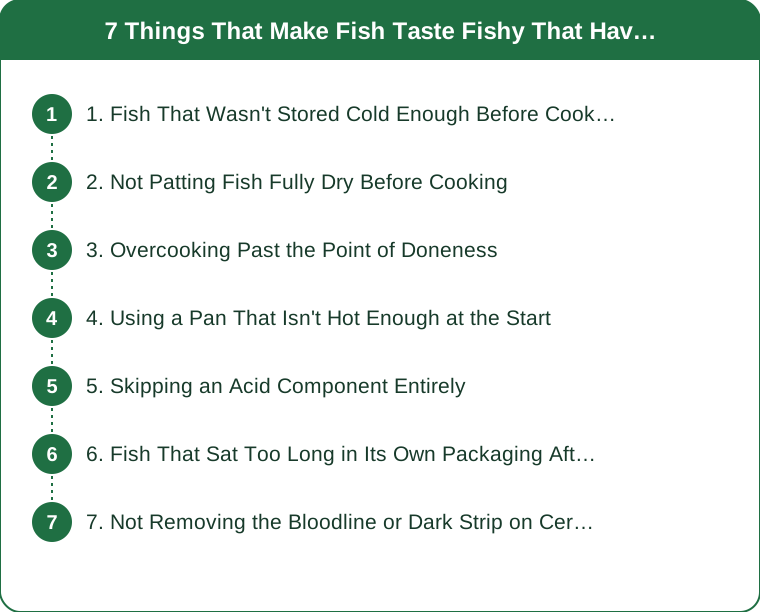
1. Fish That Wasn’t Stored Cold Enough Before Cooking
Fish spoils faster than most proteins, and even a short stretch at room temperature or in a warm fridge accelerates the exact bacterial process that produces strong fishy compounds. Keeping fish on ice or at the coldest part of the fridge until the moment it’s cooked makes a bigger difference than almost any other single factor.
2. Not Patting Fish Fully Dry Before Cooking
Surface moisture left on fish steams instead of sears, and that trapped moisture concentrates fishy-smelling compounds instead of letting them cook off. A thorough pat-dry with paper towels before it hits the pan measurably reduces both smell and taste.
3. Overcooking Past the Point of Doneness
Fish pushed past done releases more of its natural amines — the compounds most associated with fishy taste — as proteins break down further than needed. Pulling fish right at the point it flakes easily avoids this overcooked-flavor shift entirely.

4. Using a Pan That Isn’t Hot Enough at the Start
A lukewarm pan means fish sits releasing moisture and odor compounds slowly instead of searing quickly, which locks in flavor and reduces the amount of smell released during cooking. Getting the pan properly hot before the fish goes in matters more than people expect.
5. Skipping an Acid Component Entirely
A squeeze of lemon or a splash of vinegar doesn’t just add flavor — acid actively neutralizes some of the amine compounds responsible for fishy taste, which is part of why the classic lemon-with-fish pairing exists beyond just taste preference.
6. Fish That Sat Too Long in Its Own Packaging After Purchase
Even refrigerated, fish left sealed in its original packaging for several days develops stronger odor than fish transferred to fresh, breathable wrapping and used promptly — the packaging itself can trap and concentrate compounds over time.
7. Not Removing the Bloodline or Dark Strip on Certain Cuts
On fish like tuna or salmon, the dark reddish-brown strip along the center contains a higher concentration of compounds that taste stronger and more “fishy” than the surrounding flesh — trimming it out before cooking noticeably mellows the overall flavor.
TL;DR:
- Fresh fish has minimal natural smell — a strong fishy taste is usually a prep or storage issue
- Cold storage and patting fish dry before cooking make the biggest single difference
- Overcooking and a cold starting pan both increase fishy flavor
- Acid (lemon, vinegar) actively counters the compounds responsible for fishy taste
- Trimming the bloodline on cuts like tuna or salmon mellows flavor noticeably
Before blaming the fish itself, the storage and prep steps above are worth checking first.
Keep Reading
This article is for general informational purposes only and is not medical advice. Always consult a qualified health professional for guidance specific to you.