7 Reasons Fish Tastes Completely Different Cooked From Frozen Versus Thawed
Quick Answer: Thawing releases moisture and dissolved proteins, which changes texture and how the surface browns. Cooking from frozen keeps that moisture inside longer, which suits thin white fillets and can produce a better result than a badly thawed one - but it makes browning harder and does not suit thick or oily fillets. The worst option in nearly every case is a fast thaw at room temperature, which is both the most common method and the one that damages texture most.
Same fish, same pan, two completely different dinners.
The variable was what happened before it hit the heat.

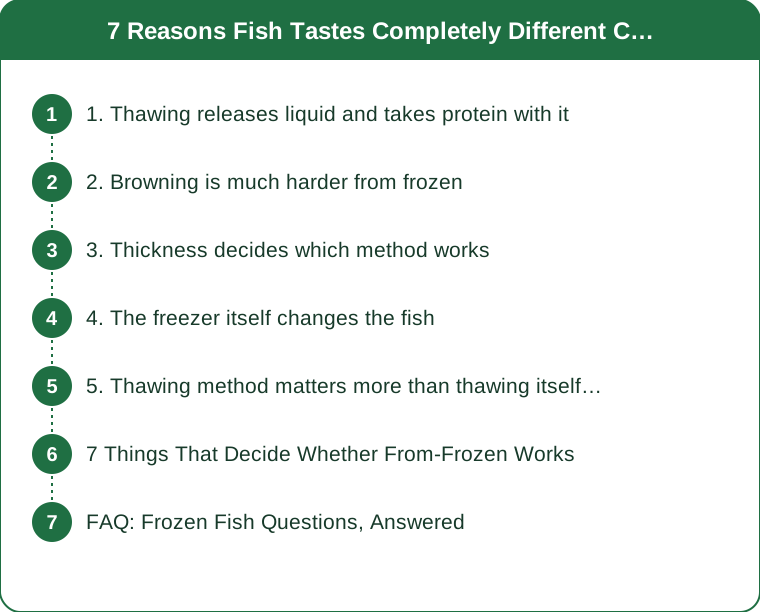
1. Thawing releases liquid and takes protein with it
Ice crystals rupture cell walls during freezing, and when those cells thaw, the liquid inside escapes.
That liquid - the drip loss - carries dissolved proteins and flavour compounds, so it is not just water.
Slow thawing in the fridge minimises drip loss; fast thawing at room temperature maximises it.
Which is why a room-temperature thaw produces a noticeably drier, flatter fillet than a fridge thaw of the same fish.
Cooking from frozen keeps that liquid inside the fish for longer, since it never has an opportunity to pool and drain away.
And commercially flash-frozen fish suffers less rupture than home-frozen fish, because faster freezing produces smaller ice crystals.
2. Browning is much harder from frozen
Browning requires a dry surface, and a frozen fillet releases surface moisture as it heats, which steams rather than sears.
Which means you trade texture for browning when cooking from frozen.
Compensate with a hotter pan and more patience, and do not move the fillet for the first few minutes.
Or use a method where browning is not the goal - baking, poaching, or a sauce-based preparation - which is where cooking from frozen genuinely shines.
Pat a thawed fillet completely dry before it hits the pan, which is the single biggest factor in whether fish browns properly.
And salt a thawed fillet fifteen minutes before cooking, then pat again - it draws surface moisture out and improves browning noticeably.
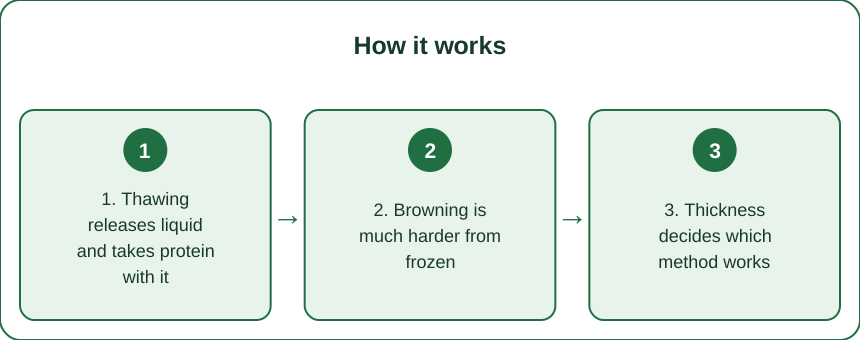
3. Thickness decides which method works
Thin white fillets under about an inch cook well from frozen - cod, haddock, tilapia, sole - because the centre reaches temperature before the outside overcooks.
Thick cuts do not. A two-inch salmon or tuna steak cooked from frozen will overcook the outside long before the middle is done.
Oily fish generally does better thawed, since the fat renders more evenly and browning matters more to the result.
Shrimp are the clearest case in favour of thawing, because they cook so fast that from-frozen produces a rubbery outside and a cold centre.
Whole fish should always be thawed.
And add roughly 50 percent to the cooking time when going from frozen, checking early rather than trusting a formula.

4. The freezer itself changes the fish
Freezer burn is dehydration, not spoilage, and it produces dry patches that will not recover no matter how you cook them.
Air is the enemy. Poorly wrapped fish develops it fast, while vacuum-sealed fish resists it for months.
Home freezers cycle in temperature, which causes partial thawing and refreezing and progressively damages texture.
Which is why fish frozen at sea and kept at commercial temperatures often outperforms fish bought fresh and frozen at home.
Wrap tightly, remove air, and label with a date. White fish is generally best within around three to six months, oily fish sooner because of fat oxidation.
And a rancid, painty smell in oily fish indicates fat oxidation rather than bacterial spoilage - it is a quality problem and the fish should be discarded.
5. Thawing method matters more than thawing itself - and 6. salt changes the outcome
5. How you thaw is the biggest single variable
Overnight in the fridge is the best method, producing the least drip loss and the best texture.
Sealed in cold water is the acceptable fast method, taking around thirty minutes for a fillet, changing the water partway.
Room temperature is the worst option - it maximises drip loss and keeps the fish in the temperature range food safety guidance advises avoiding.
Microwave defrosting partially cooks the edges, which is visible in the finished dish.
6. Salt behaves differently on frozen and thawed fish
Salting a thawed fillet fifteen minutes ahead draws out surface moisture and then reabsorbs it, improving both seasoning depth and browning.
Salt on frozen fish sits on the surface and does not penetrate, so it seasons less evenly.
Which is a real argument for thawing when seasoning matters - a marinade or a rub does almost nothing to a frozen fillet.
And brining briefly in salted water before cooking helps firm up fish that has been through a rough freeze-thaw.
7 Things That Decide Whether From-Frozen Works
Thickness. Under an inch and it usually works; over that and the outside overcooks before the centre is done.
Species and fat content. Lean white fish handles from-frozen well. Oily fish like salmon and mackerel generally benefit from thawing so the fat renders evenly.
How it was frozen. Commercially flash-frozen at sea produces small ice crystals and far less cell damage than a home freezer does. Fish frozen well cooks well from frozen.
The cooking method. Baking, poaching and saucing all work from frozen. A hard sear is where from-frozen struggles most, because surface moisture prevents browning.
Whether seasoning needs to penetrate. Marinades and rubs do very little to a frozen surface, so anything relying on seasoning depth should be thawed first.
The pan temperature. From-frozen needs a hotter pan than instinct suggests, and needs to be left alone for the first several minutes rather than moved around.
And how long it has been frozen. Even well-wrapped fish deteriorates over months, and freezer burn does not cook out. Check for dry white patches before deciding on method - badly burned fish is a quality problem no technique fixes.
FAQ: Frozen Fish Questions, Answered
Can I really cook fish straight from frozen?
Yes, particularly thin lean white fillets. Add roughly 50 percent to cooking time and expect less browning.
What is the best way to thaw fish?
Overnight in the fridge, which minimises drip loss. Sealed in cold water is the acceptable faster method. Room temperature is the worst option on both quality and food safety grounds.
Why does thawed fish taste watery?
Usually from a fast or room-temperature thaw, which maximises drip loss - and that liquid carries dissolved proteins and flavour, not just water.
Should I thaw shrimp?
Yes. Shrimp cook so quickly that from-frozen produces a rubbery exterior before the centre is warm.
Is freezer-burned fish safe to eat?
Freezer burn is dehydration rather than spoilage, so it is generally safe but the affected areas will be dry and tough. Trim them or accept the texture.
How long can I keep fish frozen?
Lean white fish is generally best within about three to six months; oily fish sooner, because fat oxidises. Wrap tightly and label with a date.
Why is frozen fish sometimes better than fresh?
Much of it is frozen at sea within hours of catch, while counter fish may have been out of the water for days. Freshness is about time and temperature, not about the freezer.
TL;DR:
- Thawing releases liquid carrying dissolved proteins - fast thaws lose the most.
- Fridge overnight is the best thaw; room temperature is the worst on quality and safety.
- Thin lean white fillets cook well from frozen; thick and oily cuts do not.
- From-frozen makes browning much harder, so favour baking, poaching or saucing.
- Salt a thawed fillet fifteen minutes ahead, then pat dry, for better seasoning and browning.
- Freezer burn is dehydration, not spoilage - it will not cook out.
How the fish was frozen and thawed matters more than whether it was frozen at all.
Keep Reading
This article is for general informational purposes only and is not medical advice. Always consult a qualified health professional for guidance specific to you.